

As a parent and early childhood educator, I’ve discovered that teaching math to toddlers doesn’t have to be complicated or boring. In fact, incorporating simple math activities into everyday play can make learning both fun and effective for little ones ages 1-3.
I’ve spent years testing various math games and activities with toddlers, and I’m excited to share the most engaging ones that’ll help develop your child’s early numeracy skills. From counting objects during snack time to sorting toys by color and size, these activities naturally blend into your toddler’s daily routine. The best part? You’ll only need items you already have at home to get started with these educational games.
Key Takeaways
- Early math exposure between ages 1-3 is crucial for developing foundational skills like counting, shape recognition, and spatial awareness
- Everyday activities like mealtime, bathtime, and playtime provide natural opportunities to incorporate math learning through counting, sorting, and measuring
- Interactive activities such as number songs, shape hunts, and sensory play make math learning engaging and fun for toddlers
- Simple household items and toys can be used as effective teaching tools without need for specialized educational materials
- Consistent, brief practice sessions (3-10 minutes) tailored to age are most effective for toddler math learning
Why Early Math Skills Matter for Toddlers
Early math exposure develops critical neural pathways in toddlers’ brains between ages 1-3. I’ve observed that introducing mathematical concepts during these formative years creates a strong foundation for:
- Counting objects in sequence from 1-10
- Recognizing basic shapes like circles squares triangles
- Understanding spatial relationships such as over under beside
- Sorting items by color size shape
- Matching identical objects patterns numbers
Research from the National Association for the Education of Young Children shows toddlers who engage in early math activities demonstrate:
| Skill Development | Percentage Improvement |
|---|---|
| Problem-solving | 35% |
| Language skills | 28% |
| Memory retention | 42% |
| Pattern recognition | 39% |
Math concepts integrate naturally into a toddler’s daily activities through:
- Mealtime counting of crackers grapes strawberries
- Bath time measuring pouring comparing volumes
- Playtime sorting blocks stacking cups matching pairs
- Outdoor exploration collecting rocks leaves comparing sizes
Early math exposure strengthens cognitive development by:
- Building logical thinking pathways
- Enhancing memory function
- Developing classification abilities
- Improving sequential ordering skills
- Strengthening number sense recognition
These foundational skills create connections between abstract mathematical concepts and real-world applications. I’ve found that toddlers who receive early math exposure show increased confidence in problem-solving tasks throughout their educational journey.
Fun Counting Activities for Little Ones
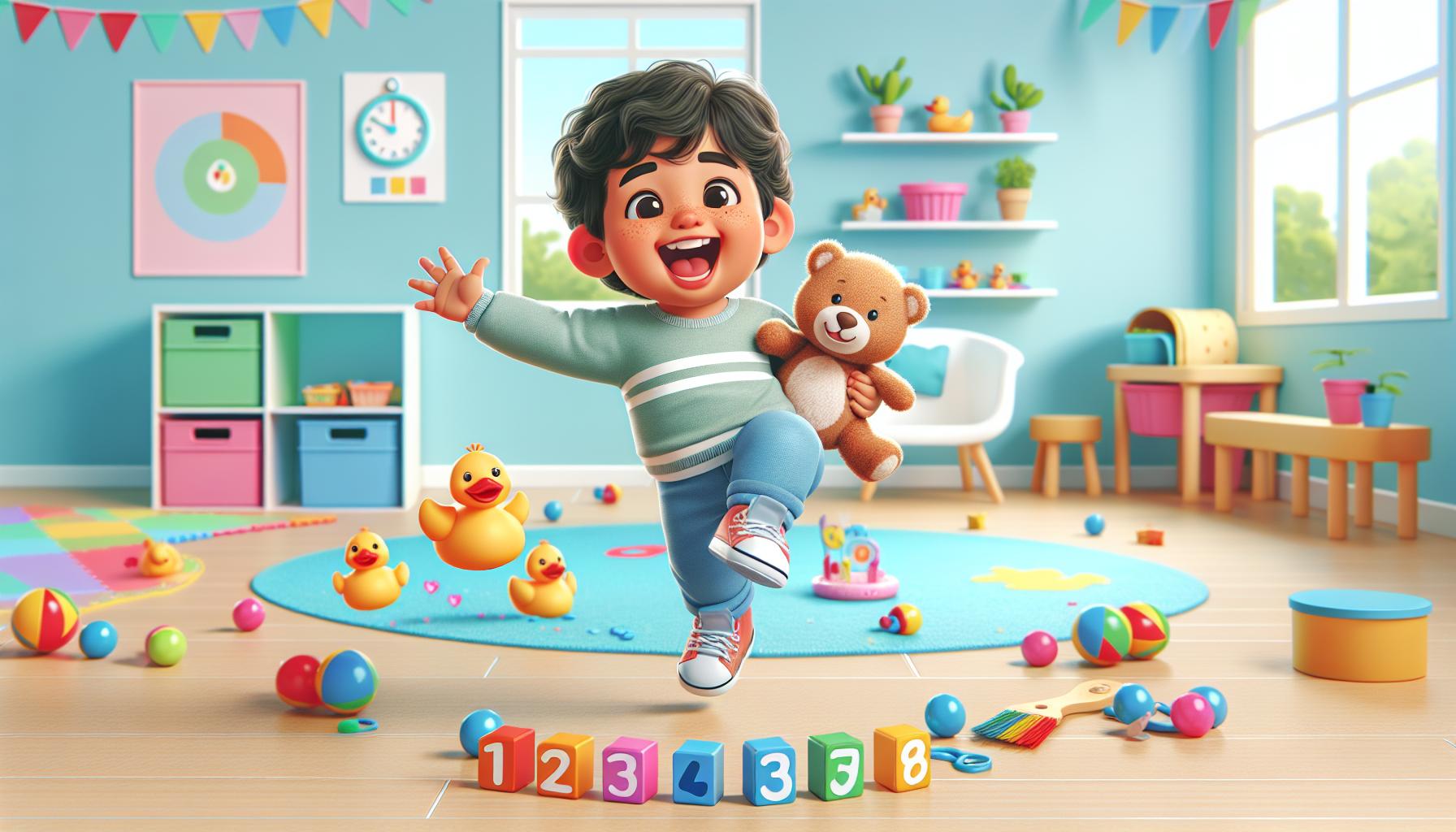
I’ve discovered that incorporating playful counting activities into a toddler’s day creates natural opportunities for mathematical learning. Here are proven methods to make counting enjoyable and educational for toddlers.
Number Songs and Rhymes
Numbers come alive through interactive songs that combine movement with counting. I’ve found success using “Five Little Monkeys,” “Ten in the Bed” and “Five Little Ducks” to teach sequential counting. These songs incorporate finger play, jumping actions and body movements to reinforce number concepts through multiple senses. Adding props like stuffed animals or rubber ducks makes these counting songs more engaging for toddlers.
Counting During Daily Routines
Daily activities provide perfect opportunities for natural counting practice. I incorporate counting in these ways:
- Count stairs while going up or down
- Count fruit pieces during snack time
- Count clothing items during dressing
- Count toys during cleanup time
- Count steps while walking to the car
| Age Group | Activity Examples | Skills Developed |
|---|---|---|
| 1-2 years | Count body parts, food items | Number recognition, one-to-one correspondence |
| 2-2.5 years | Count steps, toys | Sequential counting, number words |
| 2.5-3 years | Count groups of objects, actions | Basic addition concepts, counting to 10 |
Shape Recognition and Sorting Games
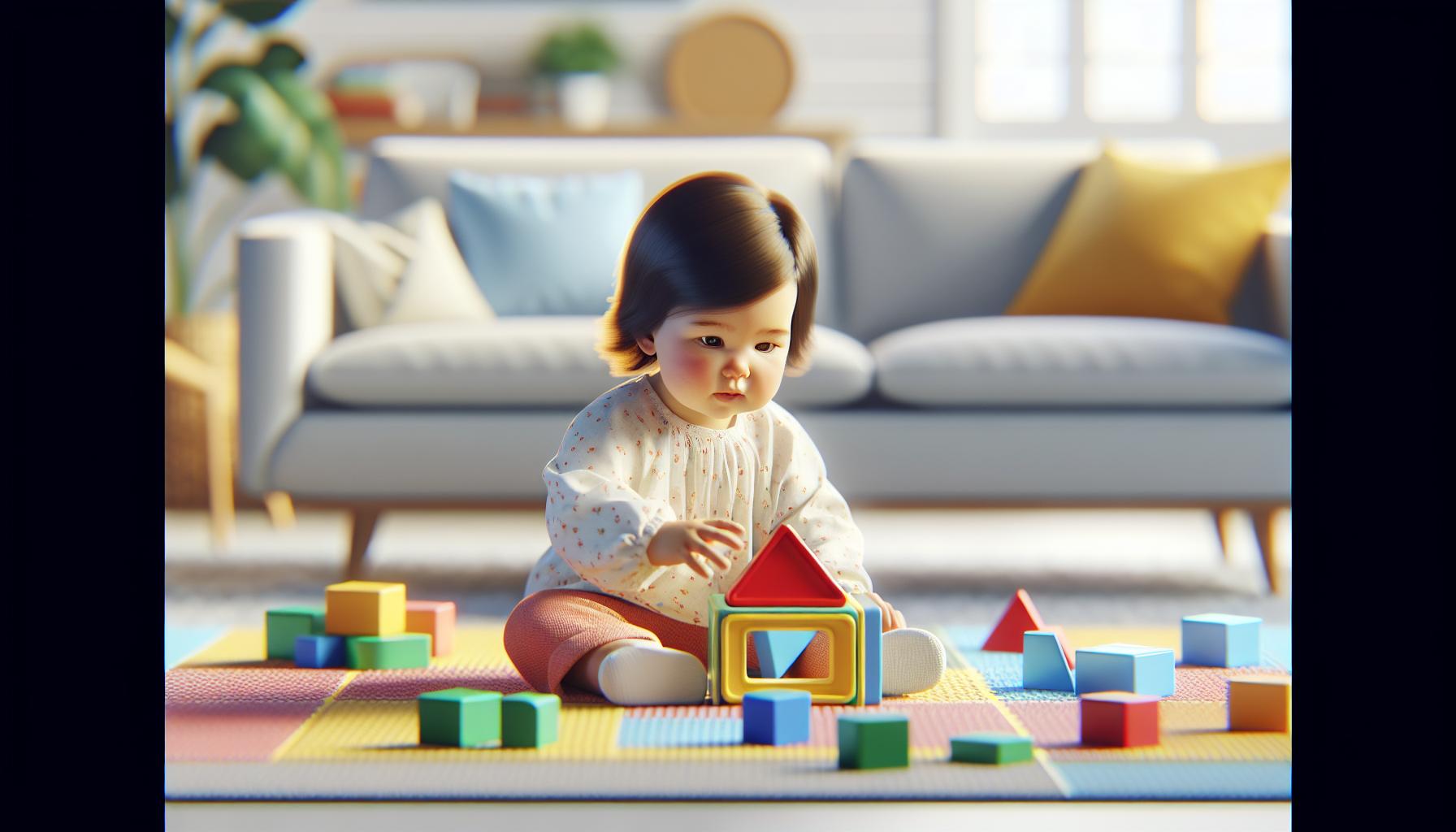
Shape recognition activities develop spatial awareness skills in toddlers while teaching them to identify basic geometric forms in their environment. I’ve found these engaging activities particularly effective for children ages 1-3.
Household Shape Hunt
A household shape hunt transforms everyday objects into mathematical learning tools. I encourage toddlers to identify circles (plates bowls clocks) squares (windows picture frames) triangles (roof shapes pizza slices) rectangles (doors books tables). Here’s how I structure the activity:
- Create shape cards using colored paper for visual matching
- Point to shapes during regular activities like mealtime or reading
- Take photos of shapes found to create a personalized shape book
- Label common household items with their corresponding shape names
| Shape Sorter Components | Benefits |
|---|---|
| Wooden sorting box | Develops fine motor skills |
| Basic shapes (4-6) | Builds shape recognition |
| Multiple colors | Enhances color matching |
| Different sizes | Teaches size comparison |
- Start with 2-3 basic shapes (circle square triangle)
- Add complexity by introducing new shapes gradually
- Use clear verbal labels when handling each shape
- Incorporate sorting by both shape color
- Allow free exploration with supervision
Simple Number Recognition Activities
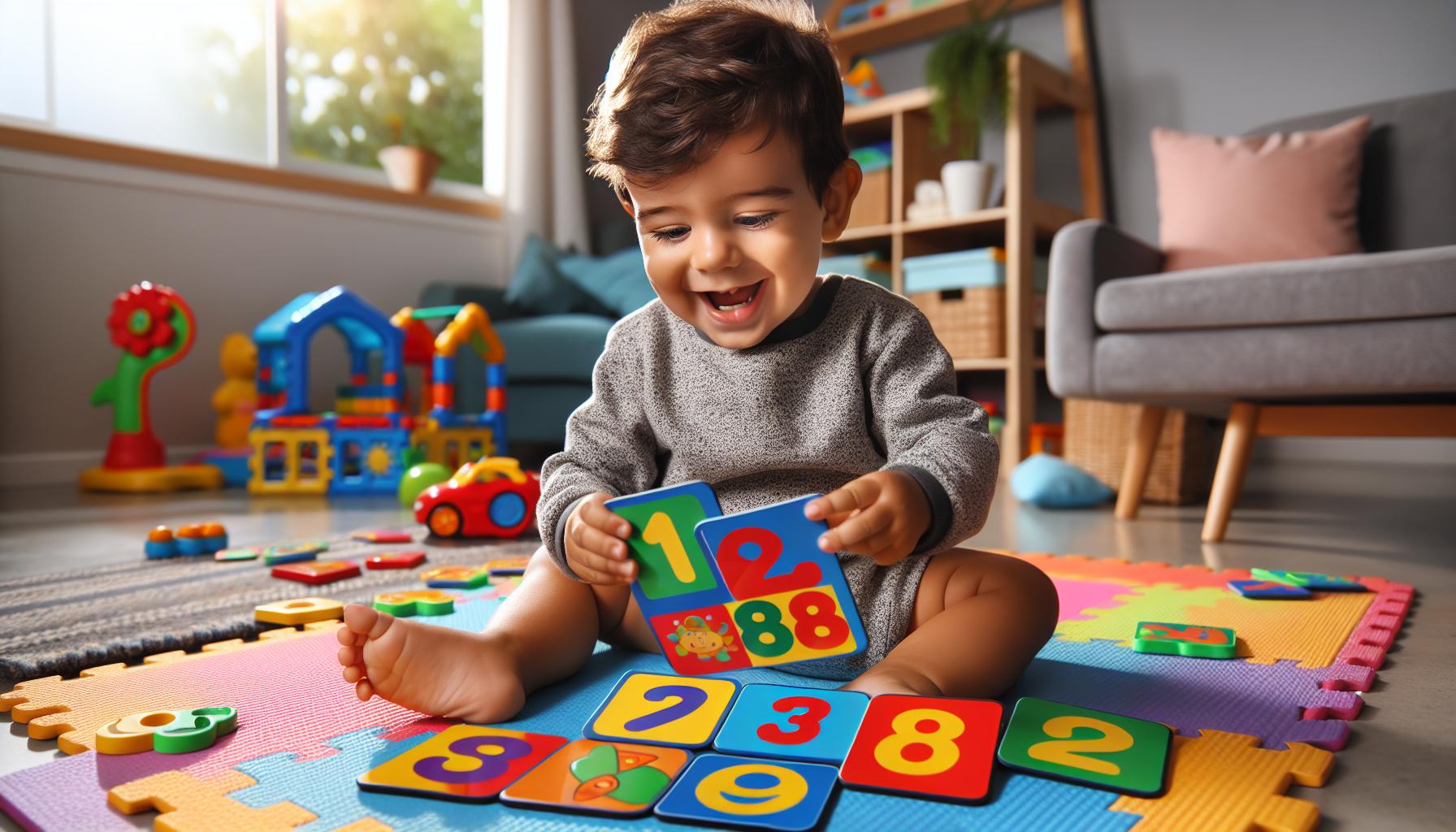
Number recognition activities establish essential foundational math skills in toddlers through hands-on engagement with numerical symbols. I’ve found these specific activities particularly effective in helping toddlers connect visual number representations with their meanings.
Number Flash Cards
I create engaging flashcard sessions using large, colorful numbers printed on 5×7 cards with corresponding dots or objects. Here’s how I maximize their effectiveness:
- Display 3 cards at a time for toddlers aged 1-2
- Point to each number while saying it clearly
- Include familiar objects on cards (3 cars, 4 stars, 5 apples)
- Mix numbers randomly to maintain engagement
- Use tactile cards with raised numbers for sensory learning
- Practice for 5-minute sessions 3 times daily
Number Puzzles and Books
I incorporate these specific tools to reinforce number recognition through interactive play:
- Large wooden number puzzles with 1-5 pieces
- Shape-sorting puzzles with numbered sections
- Matching puzzles pairing numbers with quantities
- Peg puzzles featuring numbered spaces
- Touch-and-feel number books with textured digits
- Lift-the-flap counting books showing quantities
- Picture books with numbered objects on each page
- Board books featuring one number per page
| Age Range | Recommended Activity Duration | Number Range to Focus On |
|---|---|---|
| 12-18 months | 3-5 minutes | 1-3 |
| 18-24 months | 5-7 minutes | 1-5 |
| 24-36 months | 7-10 minutes | 1-10 |
Measuring and Comparing Objects
I integrate measurement activities into toddler playtime to develop size recognition and comparative thinking skills. These hands-on experiences help toddlers understand fundamental mathematical concepts through everyday objects.
Size Ordering Games
I use three simple objects like blocks cups or toys to introduce basic size ordering concepts. Here are effective size ordering activities:
- Line up stuffed animals from smallest to largest encouraging verbal descriptions
- Stack nesting cups while naming each size: tiny small medium big huge
- Sort household items into size categories using labeled baskets
- Create size-matching activities with pairs of similar objects in different sizes
- Build towers with graduated blocks emphasizing height differences
- Fill different containers with water or sand to compare volume
- Use string to measure toy cars stuffed animals or furniture lengths
- Weigh fruits or toys on a basic balance scale comparing heavy and light
- Count steps to measure distances between objects in a room
- Stack blocks next to items to measure height
| Age Group | Activity Duration | Number of Objects | Complexity Level |
|---|---|---|---|
| 12-18 mo | 3-5 minutes | 2-3 objects | Basic comparison |
| 18-24 mo | 5-8 minutes | 3-4 objects | Size sequencing |
| 24-36 mo | 8-10 minutes | 4-5 objects | Basic measuring |
Adding Math to Sensory Play
Sensory activities create engaging opportunities to introduce mathematical concepts through hands-on exploration. These activities combine tactile experiences with counting, measuring, sorting activities.
Water Table Math
I fill water tables with 2-3 inches of water along with measuring cups, plastic numbers, funnels, containers of varying sizes to explore mathematical concepts. Toddlers practice counting as they pour water from one container to another, comparing volumes between different-sized cups. I add 3-5 floating numbers or shapes to incorporate numeral recognition activities into water play. Color-coded measuring cups introduce basic fraction concepts when filling them to different levels.
Play Dough Numbers
I incorporate numbers into play dough activities through 4 key methods:
- Rolling snakes into number shapes using number cards as guides
- Pressing plastic numbers into play dough to create number impressions
- Making counted sets of play dough balls (1-5 pieces)
- Using cookie cutters with numbers to cut out numerical shapes
I keep play dough sessions to 10-15 minutes for optimal engagement. The tactile experience of manipulating play dough while forming numbers creates muscle memory for number formation. Adding counting elements like making 3 snakes or 4 balls reinforces quantity concepts through sensory play.
Conclusion
Teaching math to toddlers doesn’t need to be complicated or overwhelming. I’ve seen firsthand how simple everyday activities can transform into valuable learning experiences. Through playful exploration of numbers shapes and measurements toddlers develop crucial mathematical foundations that’ll benefit them throughout their lives.
Remember that every child learns at their own pace and what works for one might not work for another. I encourage you to try these activities adapt them to your toddler’s interests and most importantly keep the learning fun and pressure-free. A positive early experience with math can spark a lifelong love for learning and problem-solving.