

As a parent and childcare expert for over a decade, I’ve learned that raising children is both rewarding and challenging. Whether you’re a new parent or have years of experience, implementing effective childcare strategies can make a significant difference in your child’s development and your daily routine.
I’ve discovered that successful childcare isn’t about following a rigid set of rules but rather about understanding your child’s unique needs and adapting accordingly. From establishing consistent routines to creating safe environments and promoting healthy habits, there are several proven approaches that can help make parenting more manageable and enjoyable for both you and your little ones.
Key Takeaways
- Creating a safe environment is crucial – install safety gates, secure furniture, and maintain emergency supplies including a well-stocked first aid kit
- Consistent daily routines around meals, naps, and bedtime help create stability and support healthy child development
- Proper hand washing and regular sanitization are essential for preventing illness transmission, with clear protocols for handling sick children
- Positive discipline strategies should be age-appropriate and include clear boundaries, consistent consequences, and specific praise for good behavior
- Building strong emotional bonds through quality one-on-one time and active engagement in activities like reading, art projects, and outdoor play is vital
- Effective childcare management requires organized systems, proper time management, and regular self-care practices for caregivers
Essential Safety Practices for Child Care
Safety practices form the foundation of quality child care, protecting children from potential hazards while fostering their development in a secure environment. Here’s how I implement comprehensive safety measures in childcare settings.
Creating a Safe Home Environment
- Install safety gates at stairways, doorways and hazardous areas
- Cover electrical outlets with tamper-resistant protectors
- Secure furniture to walls to prevent tipping (dressers, bookcases, TVs)
- Store cleaning supplies, medications and sharp objects in locked cabinets
- Place safety latches on drawers, toilets and appliances
- Use corner guards on furniture with sharp edges
- Keep window cords out of reach and install window guards
- Maintain smoke detectors and carbon monoxide alarms on every floor
- Post emergency contact numbers in visible locations (police, poison control, pediatrician)
- Keep a fully stocked first aid kit in an accessible location
- Create an evacuation plan with designated meeting points
- Store emergency supplies (flashlights, batteries, water, non-perishable food)
- Keep medical information cards for each child
- Practice monthly fire drills and emergency procedures
- Learn infant/child CPR and basic first aid techniques
- Document allergies and medical conditions in an easily accessible format
| Emergency Kit Essentials | Minimum Quantity |
|---|---|
| Bandages & Gauze | 25 pieces |
| Emergency Water | 1 gallon |
| Flashlights | 2 units |
| Batteries | 12 pieces |
| Non-perishable Food | 3-day supply |
| Emergency Blankets | 1 per child |
Daily Child Care Routines

Consistent daily routines create stability for children while supporting their physical health emotional development. I’ve developed these evidence-based guidelines through extensive experience in childcare settings.
Feeding and Nutrition Guidelines
Growing children require structured meal timing with nutrient-dense foods. Here’s my recommended feeding schedule:
- Serve breakfast within 1 hour of waking, focusing on protein foods like eggs oatmeal with fruit
- Offer morning snacks 2.5 hours after breakfast, including options like apple slices cheese crackers
- Schedule lunch 3 hours after morning snack, incorporating vegetables lean proteins whole grains
- Provide afternoon snacks 2.5 hours post-lunch with yogurt granola bars fresh fruit
- Plan dinner 3 hours before bedtime, balancing proteins carbohydrates vegetables
| Age Group | Daily Meals | Portion Size | Snack Frequency |
|---|---|---|---|
| 1-3 years | 3 main | 1/4-1/2 cup | 2-3 times |
| 4-6 years | 3 main | 1/2-3/4 cup | 2 times |
| 7+ years | 3 main | 3/4-1 cup | 1-2 times |
- Maintain bedtime between 7:00-8:00 PM for children under 5
- Create a 30-minute wind-down routine including bathing reading quiet activities
- Keep nap schedules aligned with age-appropriate windows
- Ensure room temperature stays between 68-72°F (20-22°C)
- Use blackout curtains white noise machines for optimal sleep environment
| Age Range | Night Sleep | Nap Duration | Total Sleep |
|---|---|---|---|
| 1-2 years | 11 hours | 2-3 hours | 13-14 hours |
| 3-5 years | 10-11 hours | 0-2 hours | 10-13 hours |
| 6-12 years | 9-11 hours | None | 9-11 hours |
Health and Hygiene Practices

Maintaining proper health and hygiene practices forms the cornerstone of effective childcare. I’ve developed these evidence-based protocols through extensive experience in childcare settings to minimize illness transmission and promote optimal health.
Proper Hand Washing Techniques
Effective hand washing reduces disease transmission by 23-40%, according to CDC data. I teach children to:
- Wet hands under running water at 100°F
- Apply soap to create a rich lather for 20 seconds
- Scrub between fingers interlacing both hands
- Clean under fingernails using fingertips
- Rinse thoroughly with water flowing down
- Dry completely with clean paper towels
Key times for handwashing include:
- Before eating or preparing food
- After using the bathroom
- Following outdoor play
- When hands appear dirty
- After wiping nose or coughing
Illness Prevention Methods
I implement these proven strategies to maintain a healthy childcare environment:
Regular Sanitization Schedule:
- Disinfect high-touch surfaces every 4 hours
- Clean toys daily using EPA-registered sanitizers
- Wash bedding weekly at 140°F minimum
- Sanitize eating areas before each meal
- Replace toothbrushes every 3 months
- Check temperatures daily at drop-off
- Document symptoms in health logs
- Isolate sick children within 30 minutes
- Enforce 24-hour fever-free policy
- Maintain updated vaccination records
| Illness Type | Exclusion Period | Return Protocol |
|---|---|---|
| Fever | 24 hours | Temperature below 100.4°F |
| Stomach Virus | 48 hours | No vomiting/diarrhea |
| Pink Eye | 24 hours | After starting medication |
| Strep Throat | 24 hours | With antibiotic treatment |
Positive Discipline Strategies
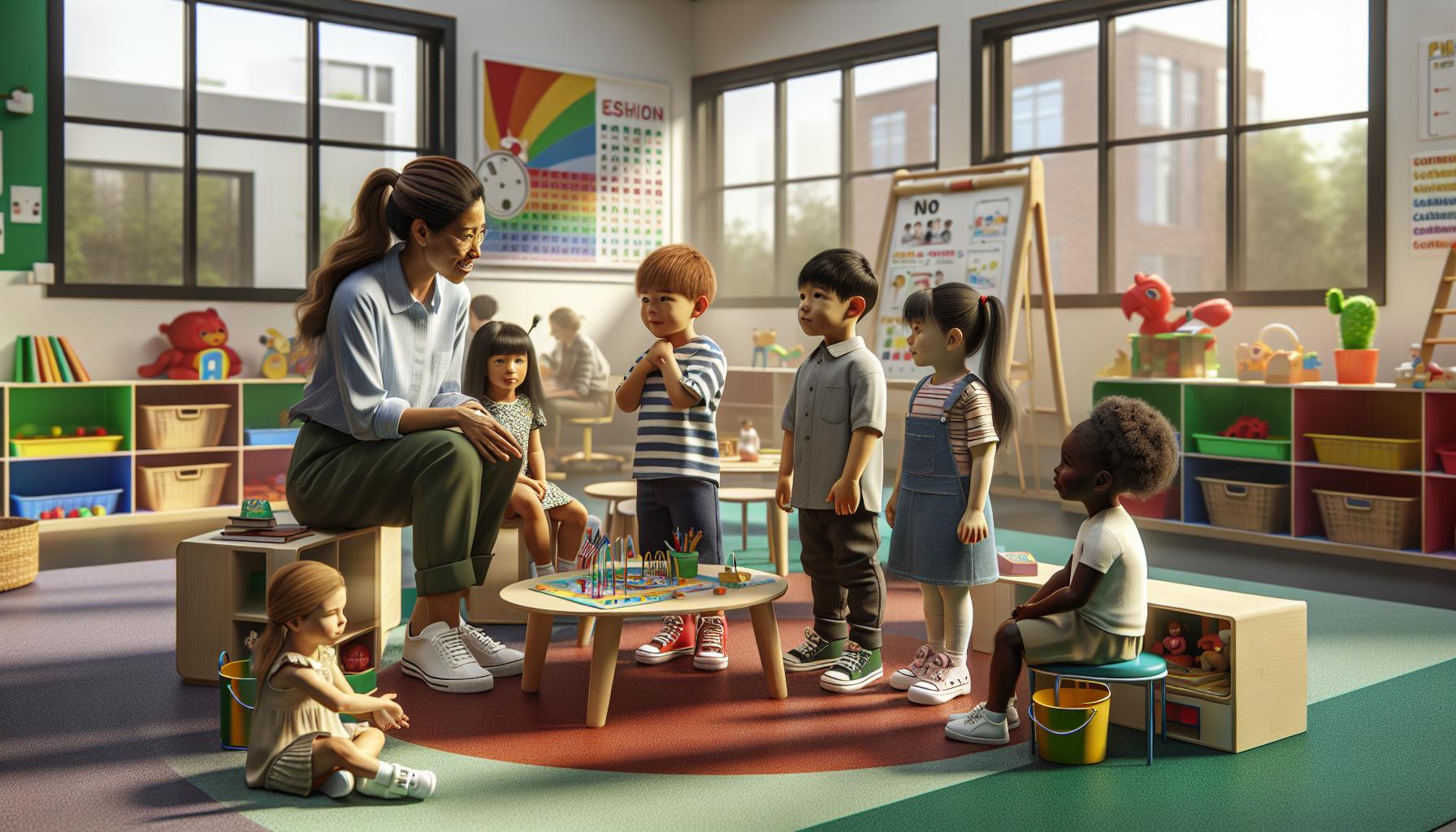
Positive discipline creates a supportive environment that encourages good behavior through clear communication and consistent consequences. I’ve developed these evidence-based strategies through 15 years of childcare experience to promote cooperation while building children’s self-esteem.
Age-Appropriate Behavior Management
Children’s behavioral responses vary significantly based on their developmental stage. For toddlers (1-3 years), I use simple directions paired with positive reinforcement like specific praise (“Great job putting your toys away!”). With preschoolers (3-5 years), I incorporate visual aids such as behavior charts and sticker rewards to track progress. School-age children (6-12 years) respond well to logical consequences and problem-solving discussions that help them understand the impact of their choices.
Key management techniques include:
- Redirect unwanted behavior to acceptable activities
- Offer limited choices to provide control within boundaries
- Use natural consequences to teach cause-effect relationships
- Implement brief time-ins for emotional regulation
- Create behavior-specific praise to reinforce positive actions
Setting Healthy Boundaries
Clear boundaries establish predictable expectations and create emotional security for children. I maintain consistency through:
Physical Boundaries:
- Designated play areas with visible markers
- Personal space zones during group activities
- Safe touch guidelines for different situations
Behavioral Boundaries:
- 3-5 essential rules posted at eye level
- Consistent daily schedules
- Clear transition signals between activities
Communication Boundaries:
- Age-appropriate voice levels for different settings
- Respectful language requirements
- Regular check-ins for understanding rules
| Boundary Type | First Response | Second Response | Final Response |
|---|---|---|---|
| Safety Rules | Verbal reminder | Time-in | Parent notification |
| Respect Rules | Redirection | Loss of privilege | Behavior plan |
| Routine Rules | Visual prompt | Helper task | Choice time reduction |
Building Strong Emotional Bonds
Emotional bonds form the cornerstone of effective childcare by creating secure attachments that support a child’s social emotional development. I’ve identified specific strategies through my extensive experience in childcare settings to foster these crucial connections.
Quality Time Activities
Daily one-on-one interactions strengthen emotional bonds through focused attention and shared experiences. Here are proven activities that enhance connection:
- Reading interactive stories with animated voices facial expressions
- Creating art projects together using various materials like clay paints markers
- Playing imaginative games such as dress-up tea parties puppet shows
- Engaging in outdoor activities including nature walks scavenger hunts gardening
- Cooking simple recipes together mixing measuring pouring ingredients
| Activity Type | Duration | Frequency |
|---|---|---|
| Story Time | 15-20 min | 2x daily |
| Creative Play | 30-45 min | 1x daily |
| Outdoor Time | 45-60 min | 1x daily |
| Cooking Tasks | 20-30 min | 2-3x weekly |
- Maintaining eye contact at the child’s level during conversations
- Using descriptive language to label emotions objects actions
- Practicing active listening by repeating paraphrasing children’s words
- Implementing turn-taking activities through board games conversations
- Encouraging self-expression through open-ended questions art music
| Age Group | Communication Focus | Key Techniques |
|---|---|---|
| 0-2 years | Nonverbal cues gestures | Mirror expressions respond to babbling |
| 2-4 years | Basic vocabulary emotions | Label feelings use simple sentences |
| 4-6 years | Complex conversations | Ask open questions encourage storytelling |
Managing Child Care Responsibilities
Managing childcare responsibilities requires a systematic approach focused on time optimization and personal well-being. Based on my experience, creating sustainable systems enables caregivers to provide quality care while maintaining their effectiveness.
Time Management Strategies
I organize childcare tasks using the following proven methods:
- Create time blocks for essential activities (meals: 7 AM, 12 PM, 5 PM)
- Use a digital calendar to track appointments, activities & medication schedules
- Prepare materials in advance (outfits, meals, supplies)
- Set up activity stations that children can access independently
- Batch similar tasks together (laundry while children nap, meal prep during quiet play)
- Implement visual schedules with pictures for daily routines
- Designate specific zones for different activities (reading corner, craft area)
Time management tools I recommend:
| Tool Type | Purpose | Update Frequency |
|---|---|---|
| Digital Calendar | Schedule tracking | Daily |
| Task Timer | Activity transitions | Hourly |
| Meal Planner | Food preparation | Weekly |
| Chore Chart | Routine management | Daily |
Self-Care for Caregivers
I incorporate these essential self-care practices into my daily routine:
Physical Care:
- Schedule 20-minute rest periods during children’s nap time
- Maintain proper posture when lifting or carrying children
- Stay hydrated (minimum 8 glasses of water daily)
- Keep healthy snacks accessible (nuts, fruit, protein bars)
Mental Wellness:
- Practice 5-minute meditation during transition periods
- Establish clear work boundaries (specific start/end times)
- Connect with other caregivers through online forums
- Rotate between standing & sitting activities
- Use stress-relief techniques (deep breathing, stretching)
- Attend monthly caregiver support groups
- Schedule regular breaks & time off
- Maintain a backup care network of 3-4 qualified individuals
- Participate in quarterly skill development workshops
Conclusion
Raising children is both an art and a science that requires dedication patience and adaptability. Through my years of experience I’ve learned that successful childcare combines evidence-based practices with individualized approaches that respect each child’s unique needs.
I encourage you to implement these strategies gradually making adjustments as needed for your specific situation. Remember that creating a safe nurturing environment while maintaining consistent routines and building strong emotional connections will set the foundation for your child’s healthy development.
Most importantly don’t forget to take care of yourself along the way. When we’re at our best we can provide the quality care our children deserve. Let’s embrace this rewarding journey of helping our little ones grow and thrive.