
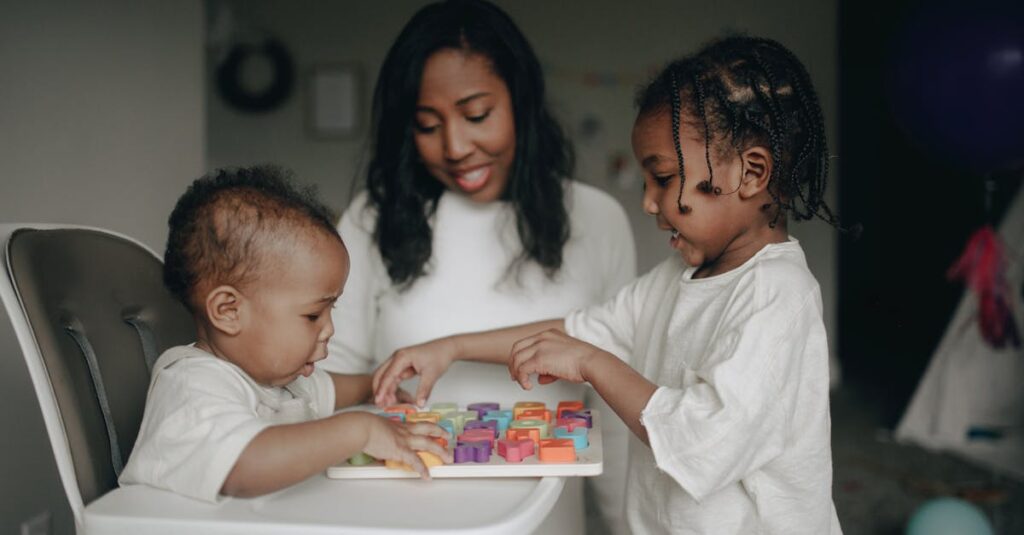
As a parent, I know how crucial the right toys are for my baby’s growth and development. Infancy is a magical time when little ones are eager to explore the world around them. Choosing toys that stimulate their senses and encourage learning can make a significant difference in their early experiences.
Table of Contents
ToggleKey Takeaways
- Understanding Developmental Stages: Infant toy selection should align with key developmental stages—birth to 3 months focuses on sensory skills, while 9 to 12 months emphasizes mobility and problem-solving.
- Role of Play: Play is essential for cognitive, social, and emotional growth, allowing infants to explore cause and effect, strengthen motor skills, and enhance communication.
- Types of Toys: Choose sensory toys for sensory stimulation, interactive toys for social engagement, and educational toys for early learning and problem-solving skills.
- Safety and Age Appropriateness: Ensure toys are safe, with smooth edges and non-toxic materials, and select age-appropriate toys to support developmental milestones effectively.
- Promoting Cognitive and Motor Skills: Engaging with toys aids cognitive development by fostering critical thinking, while also refining gross and fine motor skills essential for later milestones.
- Social and Emotional Development: Toys promote socialization and emotional health, encouraging nurturing behavior and enhancing communication through group play interactions.
Understanding Infant Development
Infant development encompasses several critical stages. During this time, babies experience rapid growth, learning essential skills through their interactions with the world.
Key Stages of Development
- Birth to 3 Months
At this stage, infants focus on building critical sensory skills. Visual exploration begins, as they track movements and recognize faces. - 3 to 6 Months
Babies gain control over their bodies and start reaching for nearby objects. They develop hand-eye coordination while exploring toys with various textures and sounds. - 6 to 9 Months
Infants begin to sit independently and interact more intentionally with their environment. They enjoy toys that stimulate problem-solving skills and encourage exploration. - 9 to 12 Months
This period marks significant mobility. Infants crawl, pull up, and may take their first steps. Toys that promote standing and cruising around furniture greatly benefit their physical development.
Importance of Play in Development
Play plays a vital role in promoting cognitive, social, and emotional growth. Engaging with toys allows infants to explore cause and effect, strengthen their motor skills, and develop social interactions. Play fosters creativity and encourages babies to express their feelings, leading to enhanced learning experiences. Educational toys that challenge and intrigue can effectively support infants in achieving these developmental milestones.
Types of Toys for Infant Development
Toys for infant development come in various types, each serving a specific purpose that supports growth. Selecting appropriate toys enhances sensory experiences, encourages interaction, and fosters early learning.
Sensory Toys
Sensory toys stimulate an infant’s senses—sight, sound, touch, taste, and smell. Rattles, soft blocks, and textured balls engage infants in exploration. Bright colors and varying textures promote visual and tactile development. Toys that produce sounds, like musical instruments or squeaky toys, enhance auditory recognition. These toys help infants differentiate between sensations and respond to their environment, reinforcing neural connections crucial for cognitive development.
Interactive Toys
Interactive toys facilitate communication and social interaction. Activity centers, play mats, and plush toys encourage infants to engage, promoting hand-eye coordination and motor skills. Toys with buttons, levers, and mirrors invite exploration, offering opportunities to learn cause and effect. These interactions support social skills and emotional development, helping infants connect with caregivers during play. Frequent engagement with interactive toys aids in language acquisition as caregivers narrate actions and responses.
Educational Toys
Educational toys encourage early learning through play. Shape sorters, stacking rings, and number puzzles introduce concepts of geometry, numeracy, and problem-solving. These toys challenge infants to think critically while developing fine motor skills. Books with colorful illustrations promote language development and cognitive engagement. Fostering curiosity through educational toys lays a foundation for lifelong learning and sets the stage for future academic success.
Choosing the Right Toys
Selecting the right toys requires careful consideration of various factors, ensuring that toys effectively support infant development while prioritizing safety.
Safety Considerations
Safety is paramount when choosing toys for infants. Inspect toys for small parts that pose choking hazards, avoiding anything that can easily break. Prioritize non-toxic materials and ensure toys have smooth edges and no sharp components. Verify compliance with safety standards from organizations like the Consumer Product Safety Commission (CPSC) to guarantee quality and safety. Regularly check toys for wear and tear, discarding any damaged items to prevent injury. Opt for age-appropriate designs that cater specifically to the developmental stage of the infant.
Age Appropriateness
Selecting toys based on age appropriateness enhances developmental benefits. Choose toys that align with the specific skill level of the child during various stages. For example, during the first three months, focus on sensory toys like brightly colored rattles to engage visual and auditory senses. From three to six months, interactive toys that promote grasping and hand-eye coordination are ideal. As infants reach six to nine months, consider toys that encourage exploration, such as soft building blocks. After nine months, opt for educational toys that foster problem-solving and mobility, such as shape sorters and push toys. Matching toys to developmental milestones facilitates optimal growth and learning.
Benefits of Toys for Infant Development
Toys play a vital role in enhancing an infant’s growth across various domains. Engaging with toys promotes cognitive, motor, social, and emotional development, setting the foundation for future learning and interaction.
Cognitive Development
Toys stimulate intellectual engagement, enabling infants to explore concepts such as cause and effect. Toys like shape sorters and stacking rings foster problem-solving skills, encouraging babies to think critically as they manipulate objects. Sensory toys, such as rattles and textured balls, enhance sensory processing, aiding in the development of pathways in the brain responsible for learning. By engaging with different toys, infants build foundational cognitive skills essential for understanding their environment.
Motor Skill Development
Toys facilitate the refinement of both gross and fine motor skills. Interactive toys, like activity centers and play mats, encourage reaching, grasping, and rolling, promoting body control and coordination. Balls and small blocks promote hand-eye coordination as infants learn to throw, roll, and stack. Engaging with these toys helps strengthen muscle groups used in crawling and walking, crucial milestones between three to twelve months.
Social and Emotional Growth
Toys also play a significant role in socialization and emotional well-being. Plush toys and dolls foster nurturing behavior, allowing infants to engage in imaginative play that enhances empathy. Group play with toys encourages interaction with caregivers and peers, developing communication skills and social bonds. These interactions nourish emotional growth as infants learn to express feelings, share, and collaborate, reinforcing a sense of security and belonging.
Conclusion
Choosing the right toys for infants is essential for their growth and development. I’ve seen firsthand how engaging toys can spark curiosity and encourage exploration. By selecting sensory, interactive, and educational toys that align with their developmental stages, we can support their cognitive, social, and emotional growth.
Safety should always be a top priority when selecting toys. Regularly checking for wear and ensuring they meet safety standards gives me peace of mind. As I watch my little one play and learn, I’m reminded that these early experiences shape their future. Investing in the right toys not only enhances their current development but also lays a strong foundation for lifelong learning and exploration.